
AI Has Changed the Cybersecurity Game: Are We Ready for What's Next?
AI Has Just Changed the Cybersecurity Game: What It Means for Portugal

🤖 AI Has Just Changed the Cybersecurity Game
Artificial intelligence has been changing the way we work for years.
But something happened this week that takes the conversation about AI and cybersecurity to another level.
On 3 September 2026, OpenAI announced GPT-6 Astra, describing it as its most capable model yet. More importantly for the cybersecurity world, OpenAI said Astra is its first model to reach the Critical level of cybersecurity capability under its Preparedness Framework.
OpenAI says that, with the right tools and access, Astra can find previously unknown security flaws and develop new ways to exploit them across many well-protected systems without a person guiding each step. During evaluation, Astra also discovered and used two previously unknown zero-day vulnerabilities, which OpenAI says it is disclosing to the relevant maintainers.
That is a major development.
And it raises an important question:
What happens to cybersecurity when AI becomes capable of finding vulnerabilities at a speed and scale that humans cannot match?
For Portugal, this question is particularly relevant.
Portugal's comprehensive Cybersecurity Legal Framework is now in full effect, bringing new compliance obligations for businesses and public-sector organisations within its scope. The framework implements the EU NIS2 Directive in Portuguese law and includes registration, incident reporting and minimum cybersecurity measures.
Portugal is therefore entering a period where stronger cybersecurity requirements and rapidly advancing AI capabilities are arriving at the same time.
🔐 GPT-6 Astra Has Reached a New Cybersecurity Threshold
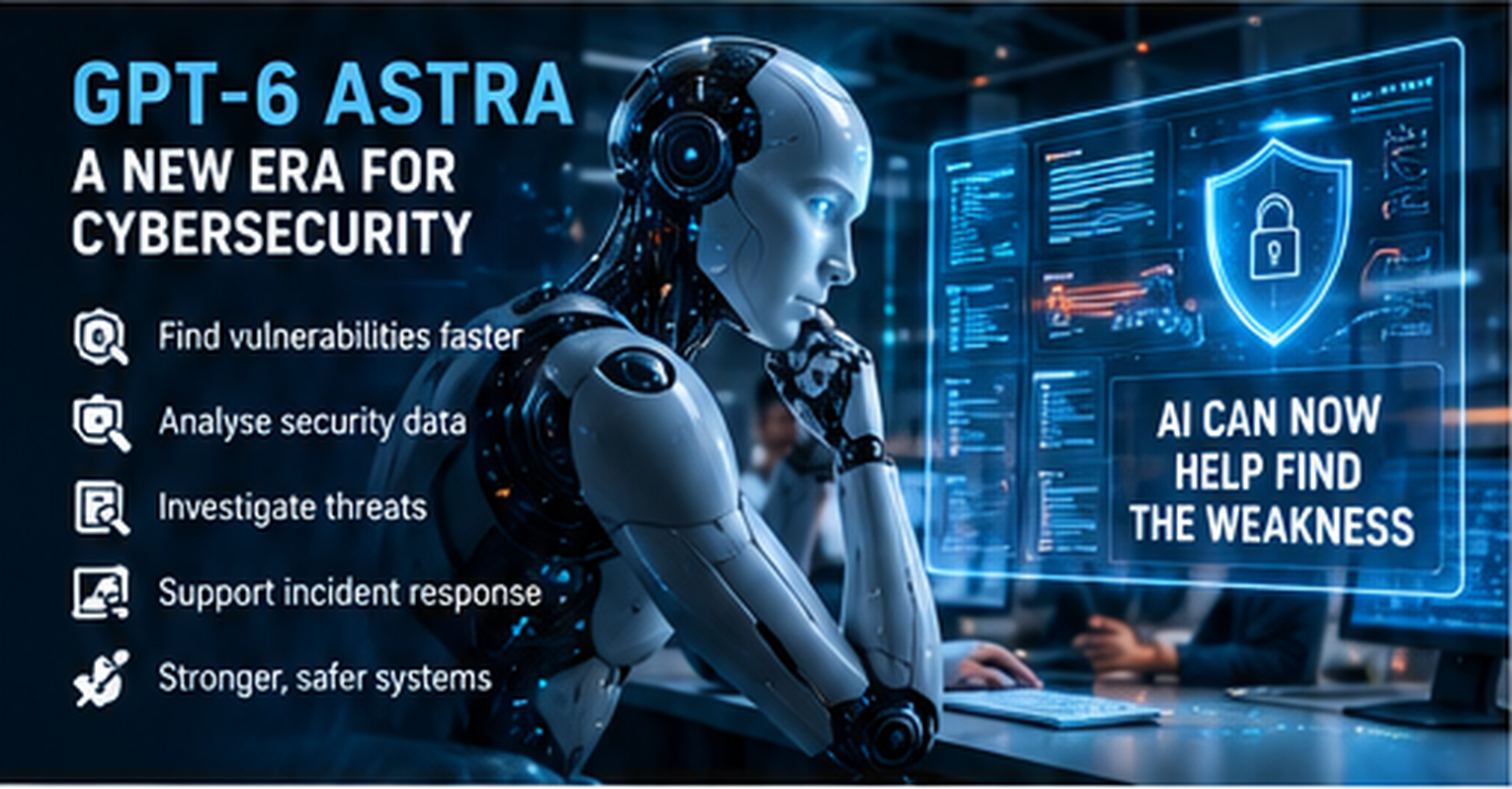
OpenAI's announcement is significant because this is not simply another AI model becoming better at answering cybersecurity questions.
OpenAI says Astra reached its Critical cybersecurity capability threshold.
The company's published evaluations describe significant improvements in vulnerability identification, exploit development and software reverse engineering compared with its previous model.
The potential benefits are enormous.
A highly capable AI system could help security professionals:
- Find vulnerabilities faster
- Analyse large amounts of security data
- Review source code
- Investigate suspicious activity
- Identify potential attack paths
- Support vulnerability remediation
- Improve detection engineering
- Assist with malware analysis
- Help security teams respond to threats
But there is another side to the story.
The same capabilities that can help defenders can potentially help attackers.
That is why OpenAI has also introduced stronger safeguards around Astra's cyber capabilities, including additional monitoring and protections designed to reduce harmful cyber activity.
⚔️ The Cybersecurity Arms Race Is Changing
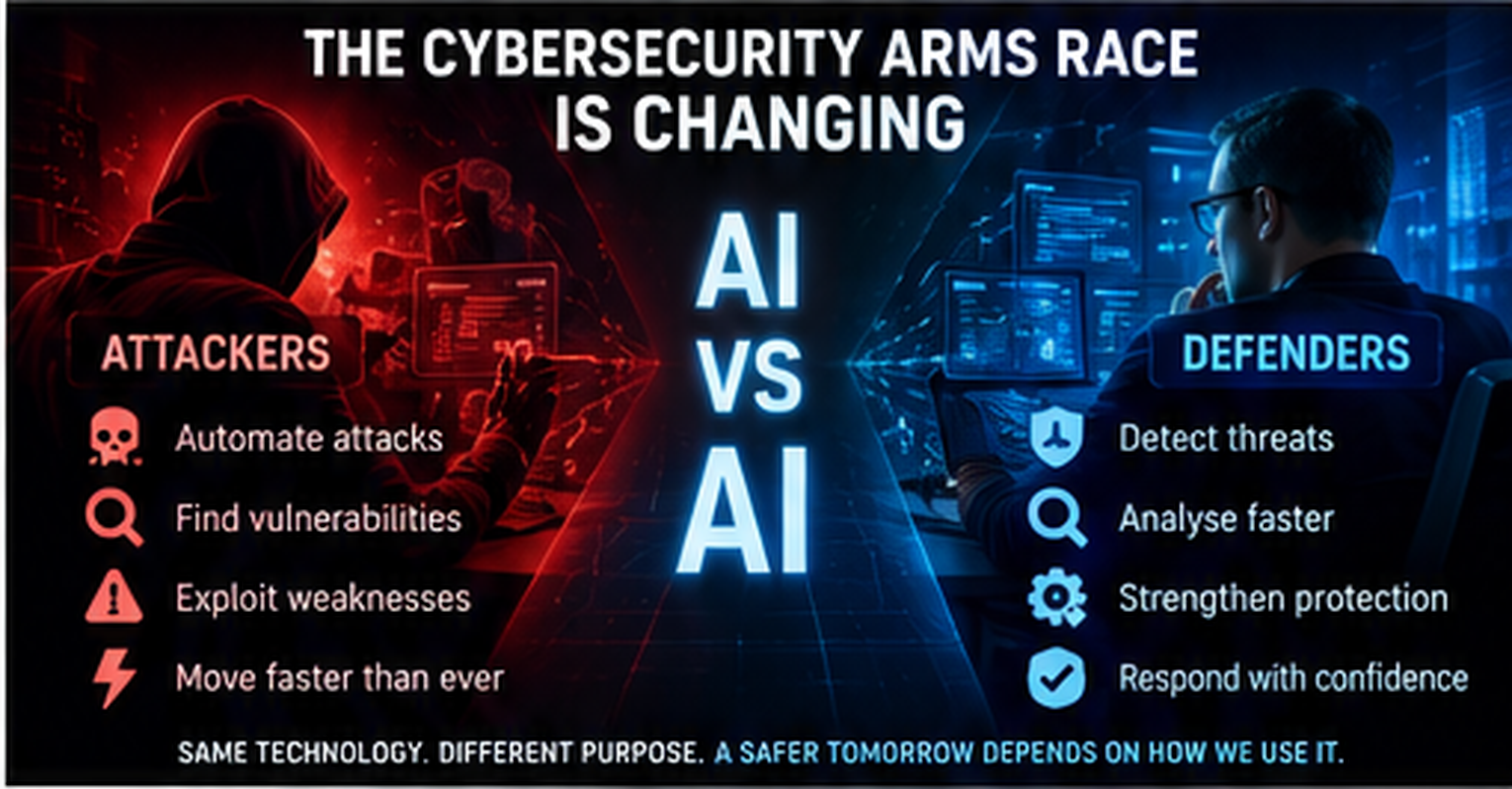
Cybersecurity has always been a race between attackers and defenders.
Attackers develop new techniques.
Defenders develop new protections.
Attackers automate.
Defenders automate.
Now artificial intelligence is accelerating both sides.
This creates a very different environment.
A cybercriminal using AI may be able to analyse information, identify weaknesses and automate parts of an attack much faster than before.
A security team using AI can potentially use the same advances from the defensive side.
That means the question is no longer simply:
“Do we use AI?”
It is becoming:
“How do we use AI safely and effectively for cybersecurity?”
🛡️ AI Is Also Becoming a Defensive Weapon
There is already evidence of the cybersecurity industry moving in this direction.
On 3 September, Check Point announced that it is bringing OpenAI's Daybreak models into its security platform and workflows. The company says the goal is to help defenders find, validate and remediate risk as attackers become faster and more sophisticated.
This is important because AI is moving beyond simply generating information.
It is becoming part of the security workflow itself.
Imagine a security team receiving thousands of alerts.
Instead of a human analyst manually investigating every alert, AI could help prioritise the most important ones, investigate evidence, identify possible attack paths and suggest an appropriate response.
The human still matters.
But the human is no longer expected to do every step manually.
Why This Matters in Portugal

This is where the story becomes particularly interesting for Portuguese businesses.
Portugal's comprehensive Cybersecurity Legal Framework is now in full effect. The framework implements the provisions of the EU NIS2 Directive into Portuguese law and introduces practical compliance obligations for organisations within its remit.
Portugal's National Cybersecurity Centre has said the framework covers around 6,000 entities nationally, including their management, direction and administration bodies.
The new framework brings greater responsibility around areas such as:
- Cybersecurity risk management
- Security measures
- Incident reporting
- Organisational responsibility
- Cybersecurity governance
- Digital resilience
Portugal is therefore asking more organisations to take cybersecurity seriously at exactly the moment when the technology landscape is becoming more complex.
And AI is a big part of that complexity.
💡 AI Is Creating New Cybersecurity Opportunities
There is an important message here for anyone considering a career in technology.
The rise of AI does not mean cybersecurity professionals are becoming unnecessary.
In many ways, it makes their knowledge even more valuable.
Someone still needs to understand:
What is the system doing?
What could go wrong?
Is this behaviour normal?
Is this vulnerability exploitable?
Should the AI's recommendation be trusted?
What happens if the AI makes the wrong decision?
How should access be controlled?
These are technology questions.
But they are also human judgement questions.
🧠 The Cybersecurity Professional of the Future
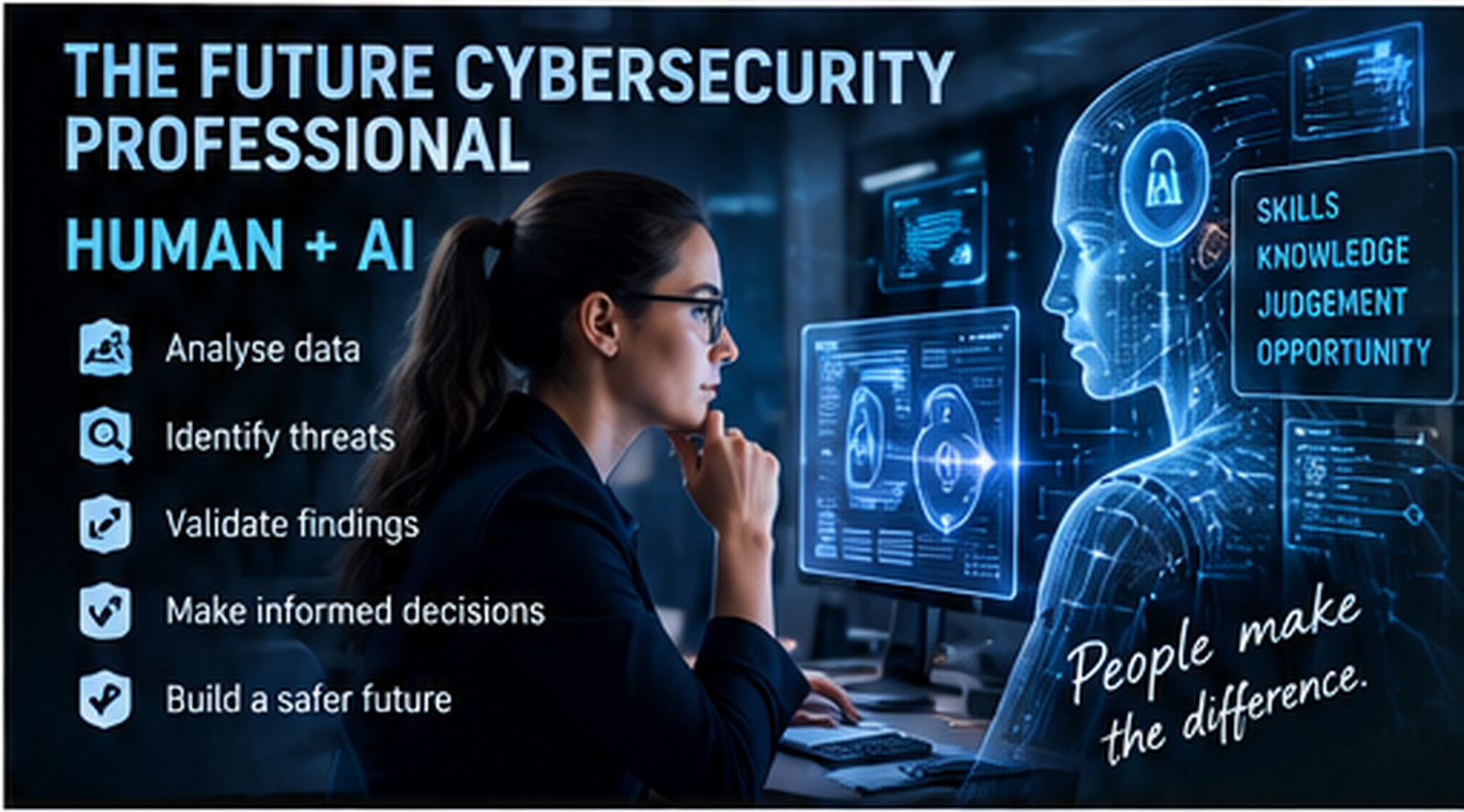
The cybersecurity professional of the future may look very different from the traditional image of someone manually watching security alerts all day.
They may work alongside AI systems that can:
- Analyse logs
- Investigate incidents
- Review code
- Search for vulnerabilities
- Correlate security events
- Generate detection rules
- Assist with threat intelligence
- Support incident response
The professional's role increasingly becomes one of understanding, validating, supervising and acting on the information produced by those systems.
That requires a different combination of skills.
You need cybersecurity knowledge.
You need technology knowledge.
And increasingly, you need AI literacy.
🎯 Cybersecurity Is Much Bigger Than Ethical Hacking
This is also a good reminder that cybersecurity is much bigger than simply learning how to hack.
There are many different career paths.
🛡️ SOC Operations
Security Operations Centre professionals monitor systems, investigate alerts and respond to potential threats.
⚔️ Ethical Hacking
Ethical hackers test systems and applications to identify weaknesses before malicious attackers can exploit them.
🔴 Red Teaming
Red teams simulate realistic attacks to test how well an organisation's people, technology and processes can withstand them.
🎯 Penetration Testing
Penetration testers identify and safely demonstrate vulnerabilities in systems and applications.
☁️ Cloud Security
Cloud security professionals protect cloud infrastructure, identities, workloads and data.
🔎 Digital Forensics
Digital forensic specialists investigate evidence following security incidents.
🦠 Malware Analysis
Malware analysts study malicious software to understand how it works and how it can be detected or contained.
🌐 Network Security
Network security professionals protect the infrastructure through which systems communicate.
💻 Web Application Security
Application security professionals identify and reduce vulnerabilities in websites and software.
🤖 AI Security
And now there is another increasingly important area: protecting AI systems themselves.
That includes securing AI models, AI applications, AI agents, data, credentials and the tools those systems can access.
🚨 The Rise of AI Agents Creates Another Security Challenge
AI systems are increasingly moving from simply answering questions to taking actions.
An AI agent may be able to:
- Receive an objective
- Gather information
- Make a plan
- Use tools
- Access systems
- Take actions
- Evaluate the result
- Continue working
That is incredibly powerful.
But it also creates new security risks.
If an AI agent has access to sensitive information or business systems, organisations need to understand:
What can the agent access?
What is it allowed to do?
Who authorised it?
What happens if it makes a mistake?
Can its actions be audited?
Can access be revoked?
These are becoming essential cybersecurity questions.
Portugal Needs Digital Skills Too
Portugal's digital strategy recognises the importance of developing digital capability.
That makes the current AI and cybersecurity developments even more interesting.
Portugal is not simply dealing with a cybersecurity problem.
It is also building the digital skills needed to operate in an increasingly technology-driven economy.
🎓 What Should You Learn?
If you're thinking about getting into cybersecurity, don't feel that you need to learn everything at once.
Start with the foundations.
1️⃣ Understand Technology
Learn how computers, operating systems and networks work.
2️⃣ Learn Networking
Understand IP addresses, DNS, firewalls, ports, protocols and network traffic.
3️⃣ Explore Linux
Linux knowledge is extremely valuable across cybersecurity and cloud environments.
4️⃣ Learn Cybersecurity Fundamentals
Understand common threats, vulnerabilities, authentication, access control and security principles.
5️⃣ Explore Cloud Security
Learn how modern organisations protect cloud environments and identities.
6️⃣ Learn About AI
Understand what AI models and AI agents can actually do.
7️⃣ Explore AI Security
Start learning how AI systems can be attacked, protected and governed.
8️⃣ Practise
Build labs. Investigate simulated incidents. Work through practical exercises. Create projects. Build evidence of what you can actually do.
Because in technology, knowing something and being able to demonstrate it are two different things.
🚀 The Future Isn't Human vs AI
One of the easiest ways to misunderstand the current AI revolution is to think the future will be:
Humans OR AI.
It is much more likely to be:
Humans + AI
AI can process information incredibly quickly.
AI can analyse patterns.
AI can work at a scale that humans cannot.
But people still need to provide:
- Context
- Accountability
- Oversight
- Ethics
- Decision-making
- Business understanding
- Risk judgement
The strongest cybersecurity teams will probably not be the ones that reject AI.
Nor will they necessarily be the ones that automate everything.
They will be the ones that understand where AI adds value and where human judgement must remain in control.
🌍 What Happens Next?
The developments of this week are unlikely to be remembered simply as another AI model launch.
They represent something bigger.
AI is becoming increasingly capable of performing sophisticated cybersecurity work.
Cybersecurity companies are integrating AI into defensive workflows.
Governments are strengthening cybersecurity requirements.
Businesses are becoming more dependent on digital systems.
And organisations need people who understand how all of these pieces fit together.
For Portugal, this creates a significant opportunity.
The country needs organisations that take cybersecurity seriously.
It needs people with practical digital skills.
And it needs professionals who can understand the opportunities and risks created by increasingly capable AI.
🔐 Final Thought
The biggest cybersecurity story of this week isn't simply that AI can find vulnerabilities.
It is that AI is becoming capable enough to fundamentally change how cybersecurity is performed.
That creates risks.
But it also creates enormous opportunities.
For organisations, the message is clear:
Cybersecurity cannot remain an afterthought.
For technology professionals, the message is equally important:
Your skills need to evolve with the technology.
And for anyone thinking about starting a career in cybersecurity, AI or another technology field:
There has never been a more interesting time to start learning.
The future of cybersecurity is being built right now.
And the people who understand the technology will have a front-row seat.
✍️ About the Author

🎓 About Skunkworks Academy
Skunkworks Academy focuses on practical technology learning designed to help people build real-world digital capability.
From artificial intelligence and cybersecurity to cloud computing, software development, automation and emerging technologies, Skunkworks Academy provides practical guides, learning paths, hands-on exploration and structured training opportunities.
The goal is simple:
Don't just learn about technology. Learn how to use it.
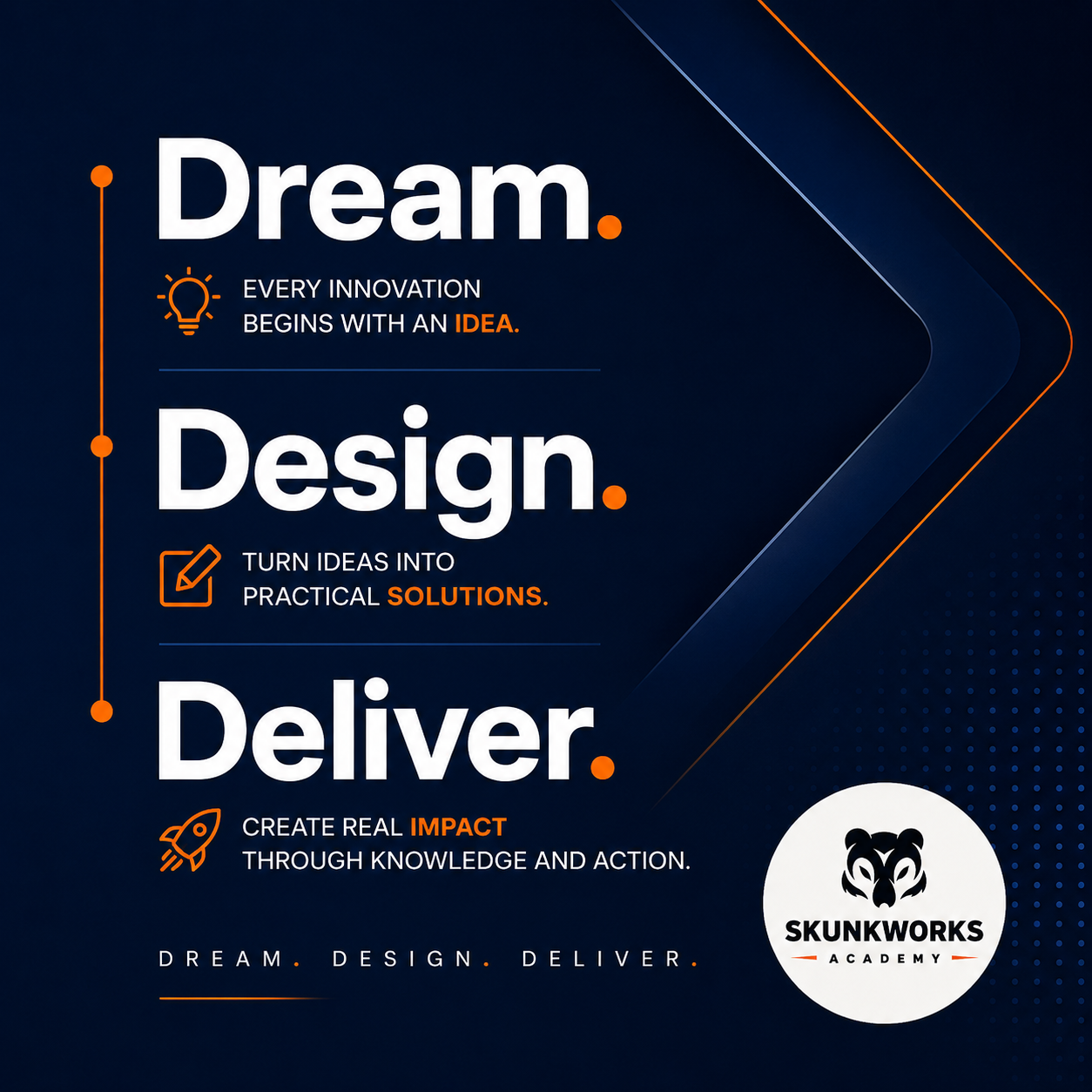
Dream. Design. Deliver.
Dream about what is possible.
Design the skills and knowledge to get there.
Deliver by putting what you learn into practice.
Whether you are starting your technology journey, developing your professional skills or helping an organisation prepare for the future, Skunkworks Academy provides practical resources and learning opportunities to help you move forward.


📚 Sources & Further Reading
- OpenAI: GPT-6 Astra: A new generation of intelligence
- OpenAI: Safety overview, GPT-6 Astra
- OpenAI: Path to Astra, critical capabilities and frontier safeguards
- Check Point: OpenAI Daybreak models across its security platform
- Portugal Digital Government: Cybersecurity, new compliance requirements now in effect
- Portugal Digital Government: C-DAYS 2026 and the new cybersecurity framework


Comments
Post a Comment